
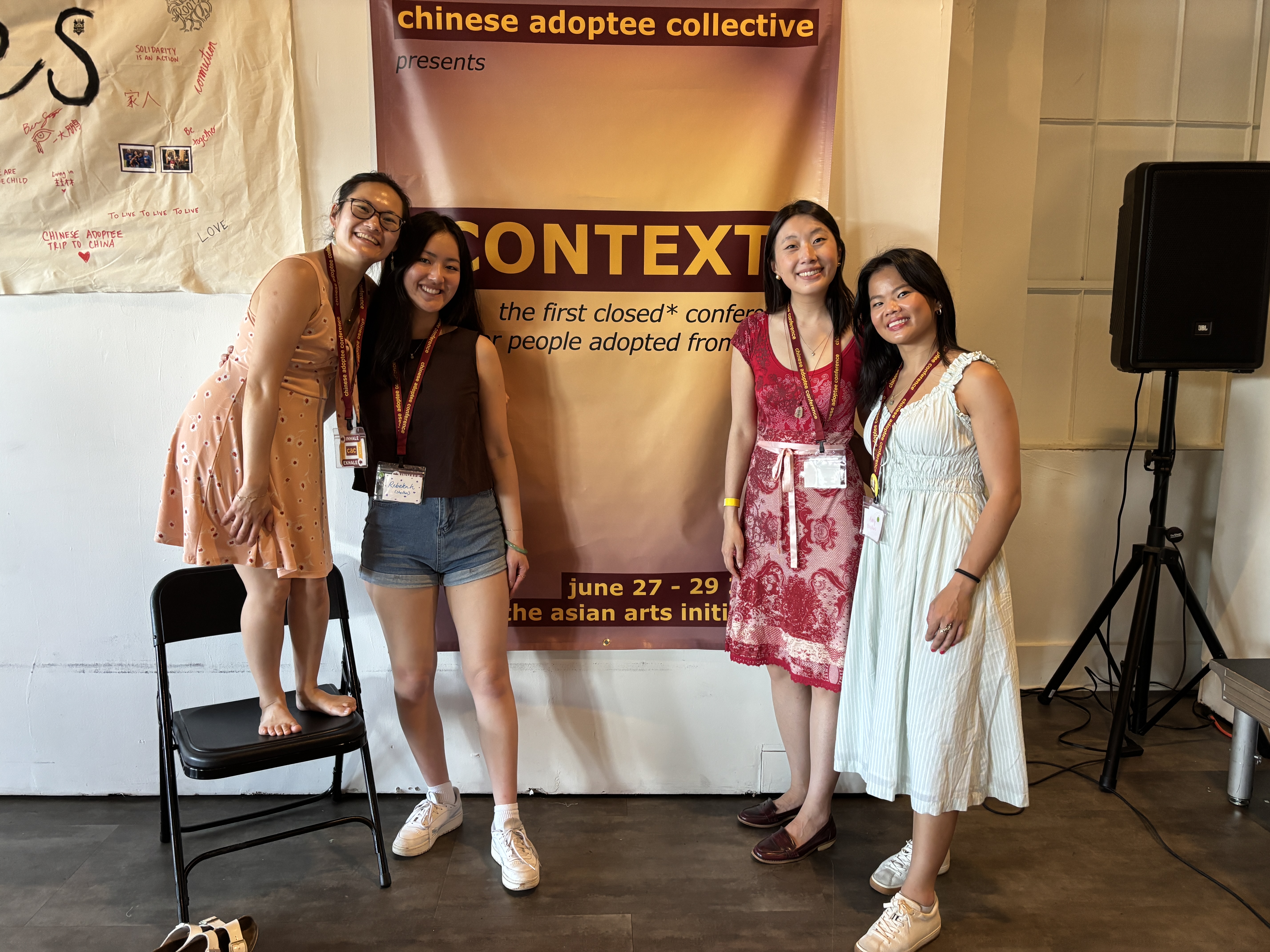
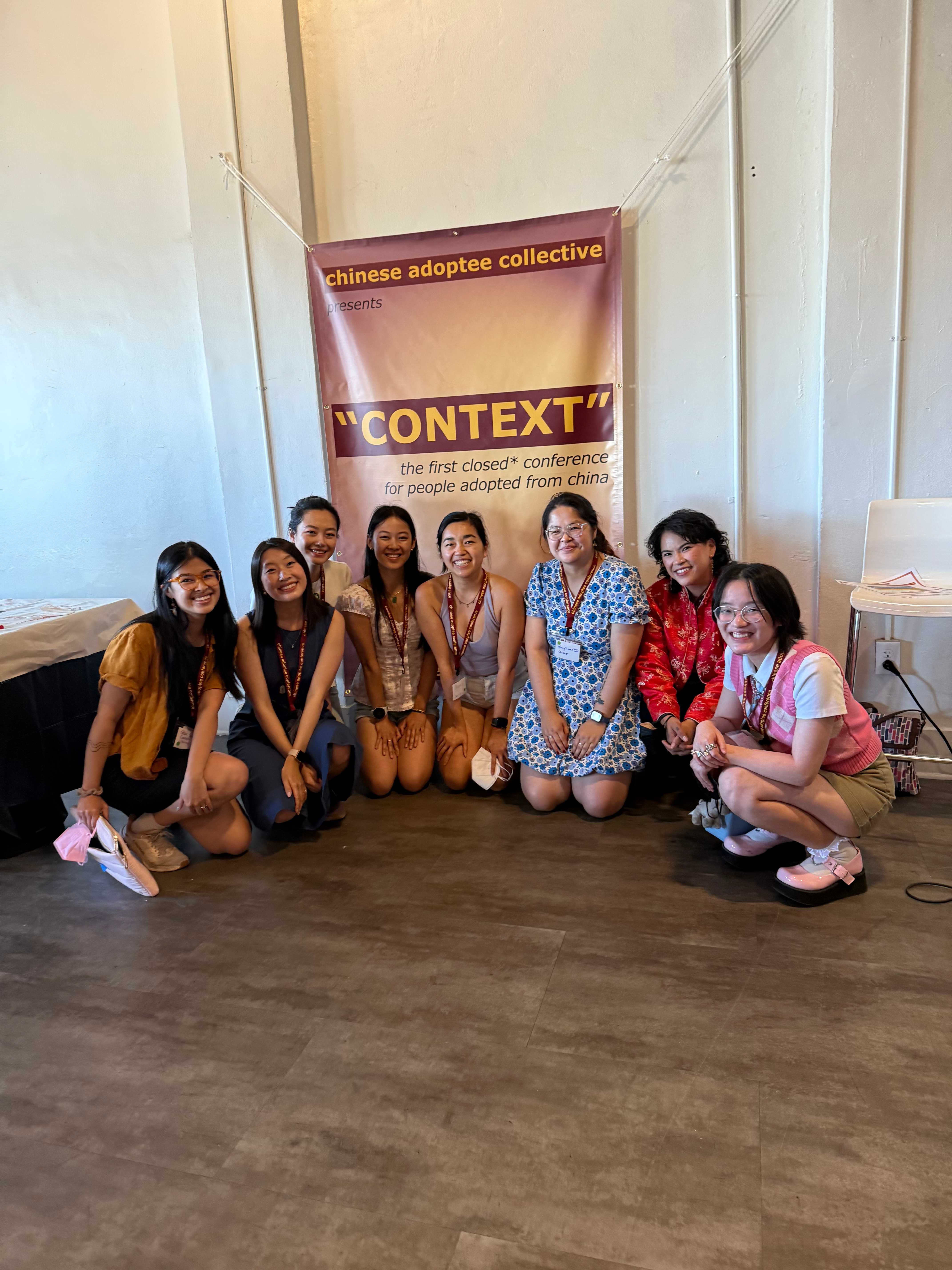
Last weekend, I had the immense honor of being the keynote speaker at the very first national Chinese adoptee conference in Philadelphia, Pennsylvania (plus two Canadian Chinese adoptees). In total, there were nearly 200 of us in attendance. To have a gathering like this, a space for only Chinese adoptees, has been a dream of mine ever since I became involved in Korean adoptee conference spaces. (I wrote about this desire in this blog post from 2015). Heavily inspired by last year’s KAAN and BIPOC Adoptees conferences, I am so grateful for all of the hard work that the Chinese Adoptee Collective (CAC) did to put this together and sincerely congratulate them on a successful first conference.
I arrived to Philadelphia on Friday and hunkered down in a La Colombe coffee shop until I finished my PowerPoint presentations. Conference festivities began that evening with a guided dumpling making session, in which we were able to eat some of the dumplings we made. The remaining dumplings were donated to the Asian Food Collective, a food justice organization dedicated to bringing culturally relevant food to community members in South Philly. Immediately after the dumpling dinner was an organized Mahjong event. I hadn’t planned on staying, but one table didn’t have enough players, and they quickly convinced me to play just one game. It has been many years since I played Mahjong. Luckily, one of the adoptees at my table had a strong familiarity with the game because her adoptive mother is Chinese.
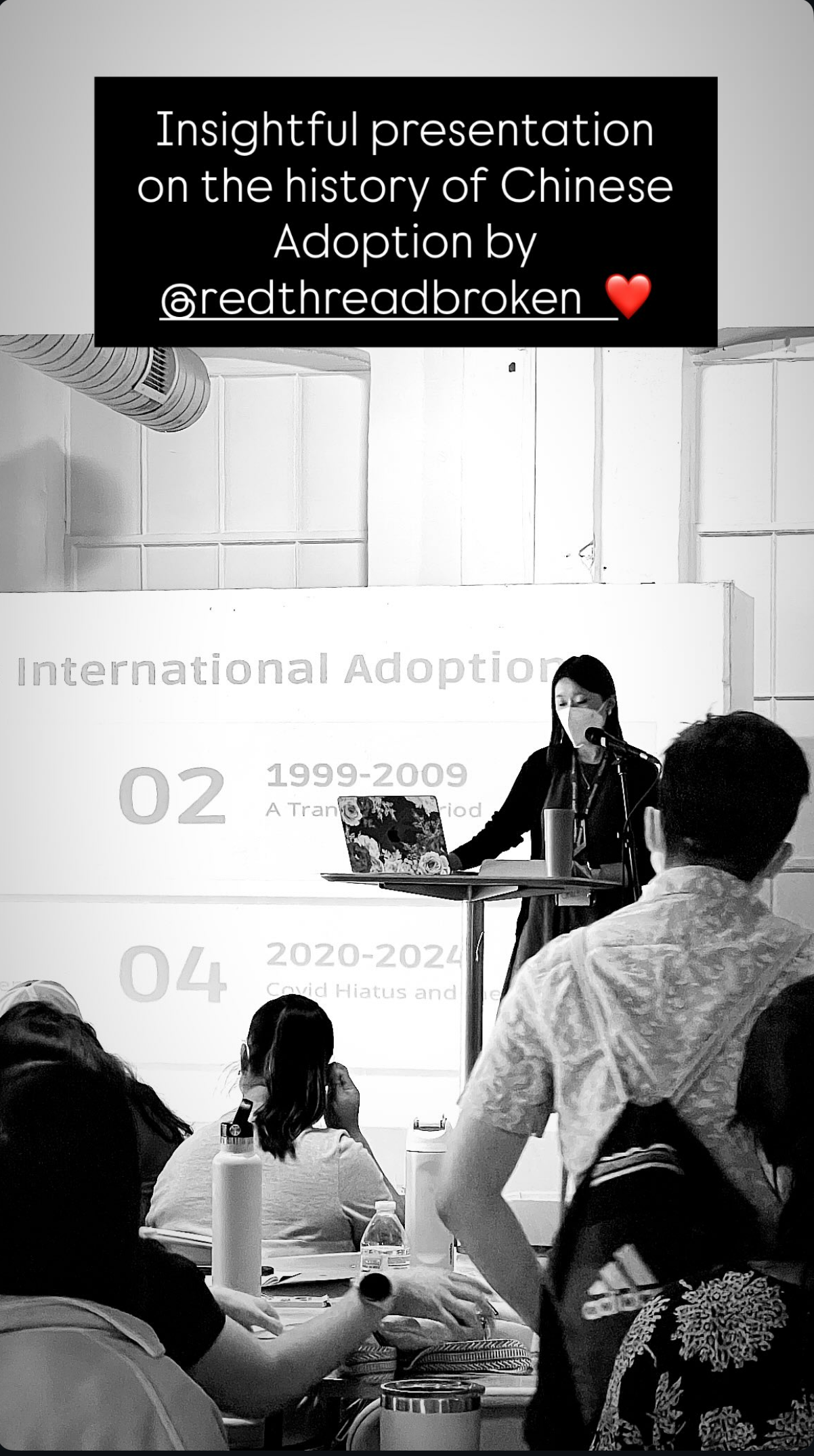
The next morning, I gave my keynote presentation, which came from a paper that I am working on with my advisor, Dr. Gina Miranda Samuels, about the history of Chinese international adoptions. Because this history isn’t discussed in schools and I didn’t know what the conference goers’ level of knowledge would be, I thought this topic would be useful in rooting us all in a shared history and providing some of the context — the theme of the conference — for conversations that would happen over the weekend.
On the same stage, just fifteen minutes later, I presented on the Adoptee Consciousness Model, a project that Dr. JaeRan Kim, Dr. Susan Branco, and I have been working on for over three years now! While some were familiar with the model already, it is always interesting to share our work with new audiences and glean feedback from adoptees.
After lunch, I was able to simply be a conference attendee. I attended a zine workshop by Cal of Marcescence Magazine and Cam McCafferty, a mixed-race Chinese and white, transnational adoptee from Canada. Cam shares a powerful zine about their adoptee experience here.
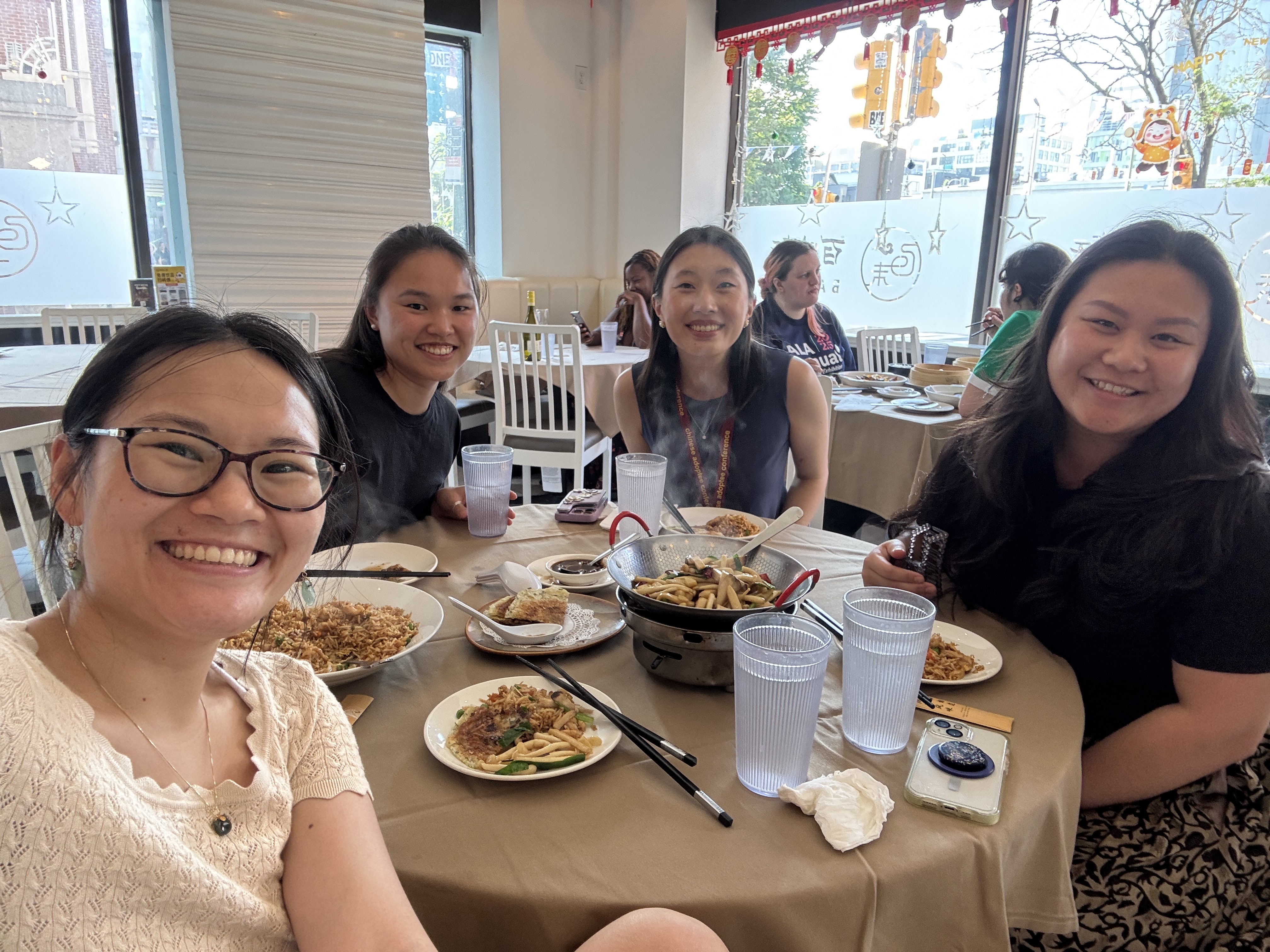
Making this conference even more special than it already was, one of my dear Chinese adoptee friends who hadn’t initially planned on attending the conference drove over five hours to spend the evening with me. We got dinner in Chinatown (SAVE CHINATOWN) with some friends from the Network of Politicized Adoptees and watched the open mic show that was the evening entertainment portion of the conference. I was so impressed with all of the creatives who shared their talents through poetry, letter writing, dance, and spoken word. Many of the adoptees who performed were in middle or high school when I first began writing this blog, which was my primary tool to process my adoptee identity. As I immersed myself in the Korean adoptee community of Minnesota, I remember having a sense of waiting for my fellow Chinese adoptees to reach adulthood, to see who we would be and what we would contribute as a collective. A feeling of pride washed over me as I watched these artistic methods Chinese adoptees are using to process and express their adoptee identities. Moreover, the show reminded me of the power of creating something beautiful in a world and from circumstances that can be so ugly.
One of the highlights of Saturday’s open mic was viewing this short film by Leah Xiuzhen Rathe.
Another memorable performance was the concluding act, a drag performance by Cai Yan Pepper/Jaime Renman.
The conference concluded on Sunday with a panel on adoptees’ experiences when returning to China and a panel on birth parent search and reunion. I so appreciated these panels that were specific to the Chinese adoptee context, because birth search is so different for Korean adoptees who have some documentation and for U.S. domestic adoptees who do not have to confront language and ocean barriers in the process. However, because panelists had only been in reunion for a couple of years or less, long term implications and navigation of birth family reunion could not be discussed.
During my time on the advisory council for the KAAN Conference, there were a large number of first-time attendees each year as well as adoptees who were new to thinking about adoption in nuanced and critical ways, oftentimes culminating in what ACM terminology would call a rupture moment at the conference. One notable difference between this conference and KAAN was that no one seemed surprised or overwhelmed by thinking of adoption as being rooted in systems of oppression, inequitable policies, and complicated notions of family. I attribute this to the relatively young ages of Chinese adoptees, the majority of whom are Gen-Z, digital natives, and the oldest of whom are millennials, the first generation to grow up with widespread internet access. Because we have had access to adoptee resources and digital community at a much younger age, adoptee consciousness seems to be occurring sooner, too.
As I looked around the room, which was full of dark hair and youthful faces, I noticed the subtle ways people had accentuated their Chinese adoptee identities by donning delicate jade jewelry, red knotted bracelets, and tattoos of their Chinese names and Chinese themes. Because the setting was less formal than a hotel or convention center and because we were all relatively peer age (perhaps a 10 year age span, roughly early 20s to early 30s), the experience felt somewhat reminiscent of the Chinese culture camp for adoptive families that I attended when I was growing up, but this time without the parents.
As someone who’s been involved with Korean adoptee groups for a long time, I did feel like something was missing through not having multiple generations of adoptees there. Because Korean international adoptions have taken place over such a long period of time, the Korean adoptee community has varying levels of wisdom from within. I have learned so much from older adoptees sharing their life experiences and milestones that I have yet to reach; however, all of us at this conference have had limited life experience at this point. I wonder if this tight age range will result in our Chinese adoptee community considering issues more in the present rather than future casting. Additionally, I wonder how we will balance this need/desire to have a space of our own with the profound benefits of learning with and from adoptees who have been doing this work a lot longer.
One of the difficult parts of being such a truncated group, where we were all adopted within a relatively short time span, is that we are trying to lead while at the same time we’re still learning. Yet because our adoptee cohort is a relatively young one, our story as a group is largely still unwritten. The history I relayed in my keynote presentation is one that has happened to us, but now that we are adults, we are the agents in shaping what our continued Chinese adoptee legacy and history will be. I know this conference is just the beginning, and I can’t wait to see what we are going to do.


 Red Thread Broken
Great news!
LikeLike